
I’m going to tell you about a tool that is regularly used in personal and team development. It’s called the Johari Window, and it was developed by a couple of chaps called Joe Luft and Harrington Ingham. Johari is a portmanteau of their two names – Joe and Harry. They’re like the Brangelina of the personal development world.
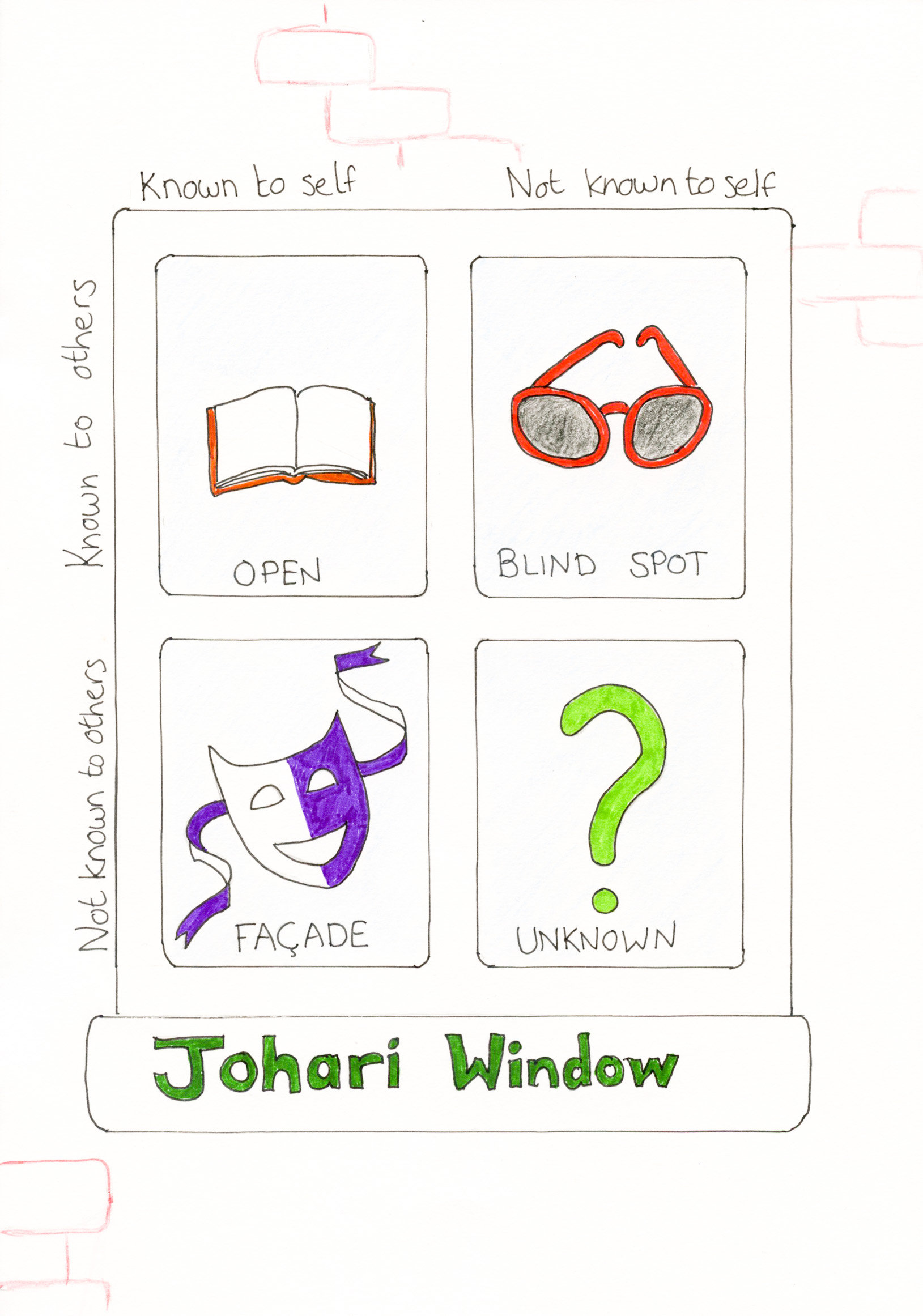
The tool is essentially 4 boxes, that look like a window, that are populated (either by yourself or in conjunction with others) with information about you, your skills, knowledge, experience, abilities etc. It looks a bit like this:
The Open Area or Arena contains the things that you and other people are aware of. This is the public you.
The Blind Spot contains things that are known to others but not to you.
The Hidden Area or Facade contains the bit of you that you keen from everyone else. This is the private you.
Finally, there is the Unknown. This contains things that you and others don’t yet know about you. This is the potential you.
The tool is used in many ways, but a good starting point is to use the list of adjectives that Joe and Harry originally came up with. You can fill in the bits that you know yourself but you can’t fill in the Blind Spot or the Unknown. This is where you need to get feedback from others, and why this exercise is great to do in pairs or in teams. A good start is to do it with you partner or your best friend. If you don’t want do do the exercise with anyone else, then try and pick up the feedback yourself. Listen to the complements people give you. Accept when someone says “You are always so organised” and file it away under you blind spot. If other people think you are organised (or any other trait) and you don’t, maybe it’s because you set impossibly high standards for yourself in that area.
So, what’s the point of this? We’ll firstly it is important to know yourself, and by getting feedback you can get a wider view of how you come across. This is a benefit in itself, as the positive things will hopefully give you confidence and remind you that you do have strengths. The things you don’t quite like as much you should see as areas for development. It’s ok not to be great at everything, no-one is. But we should work on the things that we aren’t very good at, because life, work, and society demand various things from us and we need to be able to deal with them, even if the qualities required aren’t our strengths.
The other facet of the Johari Window is to see how open you are. If you have more things in the facade or blind spot areas than in the open area then you may be struggling without realising why. By sharing more of ourselves with others we will find ourselves making more connections and feeling more understood by others. The same is true for knowing ourselves; by understanding how other people see us, or by realising the things we didn’t acknowledge about ourselves we can navigate our way in the world and in the workplace better, playing to our strengths and recognising our development needs.
Everyone has quadrants of different sizes, but all of us should be striving to increase the public us, whether that is by increasing our self knowledge and decreasing the Blind Spot, or sharing more of our true self with others and shrinking the facade.
As for the Unknown, well those aspects of you will emerge during challenging times, or maybe they are bugging you right now, bubbling away in your subconscious. When they emerge they will no longer be unknown, and you just might surprise yourself.
 Nine to Thrive